
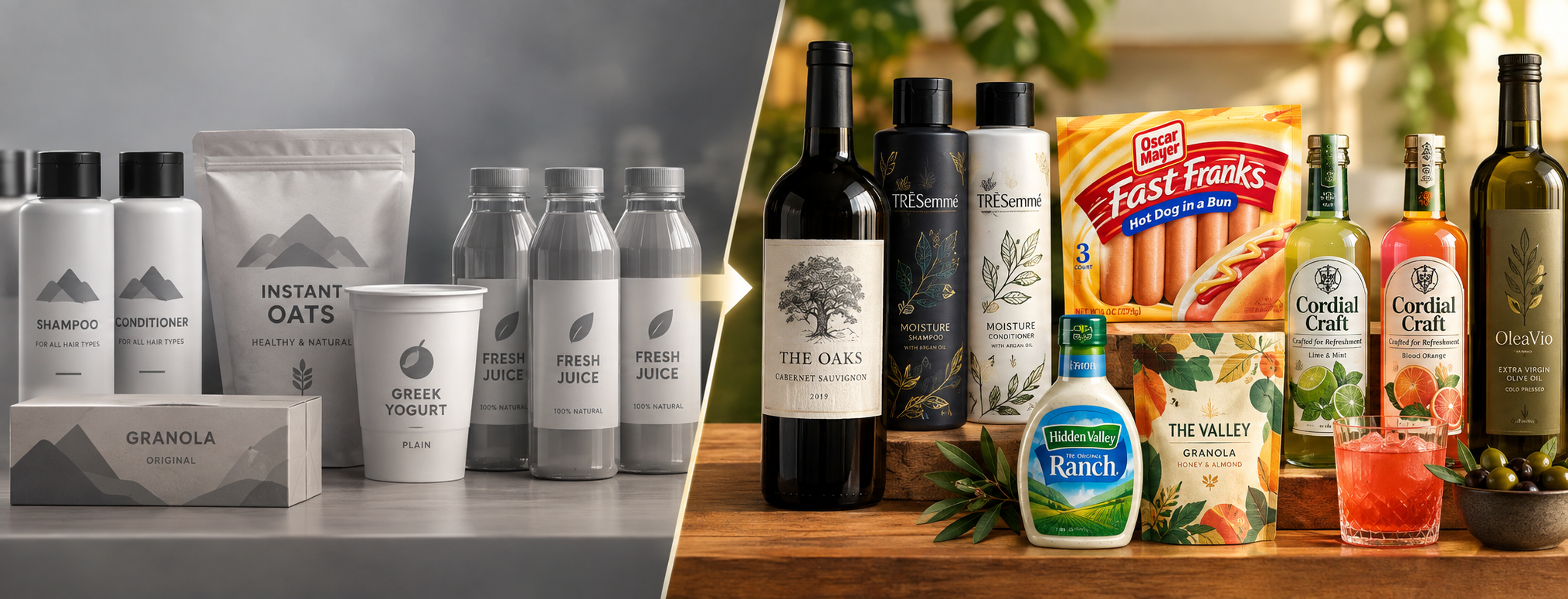
"AI slop" became Merriam-Webster's 2025 Word of the Year for a reason: the internet is absolutely flooded with low-quality, machine-generated content, and consumer product design is no exception. Every single week, brands excitedly publish packaging concepts and label mockups pulled straight from an image generator with zero human editing. It is fast, cheap, and quietly destroys brand credibility. As packaging designers in San Diego, we see firsthand how heavily AI slop design is flooding the retail market with forgettable graphics that instantly repel discerning buyers who expect authentic brand experiences.
While this generic AI design might look highly polished on a glowing digital screen, the severe impact of AI on packaging sales becomes glaringly obvious in physical retail environments. In this blog, we will cover exactly what this automated phenomenon actually is, how it specifically manifests in retail packaging, the real financial cost once a product hits a physical store shelf, and what genuinely creative, human-led design looks like instead.
What Is "AI Slop Design"?
AI slop design refers to packaging, label, or marketing graphic work generated by AI and published with little to no human editing, strategic direction, or brand oversight.
The Deceptive Initial Polish: This algorithmic output looks completely finished at first glance on a glowing, high-definition computer monitor. It frequently tricks busy marketing teams into believing the design job is thoroughly completed without the need for further professional refinement or prepress preparation.
Complete Breakdown Under Physical Scrutiny: When examined closely in a real-world setting, these digital files immediately break down and lose their visual appeal. You will consistently find inconsistent colors that fail to match established corporate guidelines, completely undermining the visual identity that companies spend years building.
Garbled and Nonsensical Typography: Critical product information, mandatory regulatory text, and precise nutritional facts are often transformed into unreadable nonsense. Image generators fundamentally cannot comprehend actual language syntax or typographic kerning, resulting in letterforms that melt together into absolute gibberish.
Lack of Genuine Design Hierarchy: There is absolutely no real design hierarchy guiding the consumer's eye from the central brand logo down to the essential product benefits. A successful package must tell the buyer exactly where to look first, second, and third to successfully close the sale.
The Missing Art Direction Skillset: Generating a highly attractive conceptual image and properly art-directing a cohesive, legally compliant brand asset are definitely not the same skill. Generic AI design happens when automated generation is mistakenly substituted for intentional art direction.
How AI Slop Design Shows Up in Packaging and Label Work
The creeping, negative influence of unedited artificial intelligence manifests in very specific, highly recognizable failure patterns. Identifying these costly visual red flags early is absolutely crucial before the product hits the shelf.
Deeply Inconsistent SKU Branding: You will frequently notice drastically inconsistent brand colors and structural layouts between different product flavor variations or SKUs. This instantly destroys the unified visual front required for strong brand consistency on the retail shelf.
Mismatched Typographic Profiles: The generated typography fundamentally fails to match the established, trademarked brand fonts that consumers already recognize. This creates a deeply disjointed aesthetic that subconsciously signals lower quality and poor attention to detail.
The Digital to Physical Translation Problem: These digital failures heavily mirror the exact failure patterns documented when analyzing how to spot AI flyer design, but they become much more financially destructive when applied to a physical consumer product.
The Dangers of Extended Shelf Exposure: While an AI flyer design gets scrolled past in approximately two seconds, a physical package sits prominently on a store shelf for weeks. This extended, stationary exposure gives an AI slop design mistake far more time to actively damage a purchase decision.
Structural and Vector Hallucinations: Central brand logos and essential iconography often look subtly distorted because the algorithm hallucinated complex vector details. When a consumer notices that the primary logo is mathematically incorrect, the product's perceived value instantly plummets.
Complete Regulatory Compliance Failures: Unedited AI-generated packaging routinely fails to account for uncompromising legal parameters. They cannot generate perfectly scannable retail barcodes, nor can they guarantee that mandatory allergen warnings meet strict government size requirements.
The Real Cost: Why Generic Design Is Quietly Killing Sales
Generic design quietly kills sales because modern shoppers inherently register a design's authenticity within mere seconds and subsequently adjust their financial trust accordingly.
Plummeting Consumer Trust Scores: A September 2026 industry study conducted by T&T Design Group found that hybrid AI-human design earned a robust 5.08 trust score compared to a dismal 4.12 for AI-only design.
Massive Loss of Purchase Preference: These critical AI packaging consumer trust statistics translate directly to massive shifts in retail market share. The collaborative hybrid approach decisively won 42% of head-to-head purchase preference versus just 17% for AI alone.
Subconscious Buyer Hesitation: That massive statistical gap occurs because a buyer's brain immediately flags something as "uncanny" before they consciously register exactly why. This subtle internal hesitation prompts the consumer to quietly reach for a more authentic, human-designed competitor.
Dramatically Reduced Willingness to Pay: The exact same extensive study found that everyday consumers simply were not willing to pay premium prices for products featuring AI-only graphics. They actively valued comparable human vs. AI design alternatives significantly higher.
Destroyed Physical Shelf Differentiation: When your product packaging looks exactly like a generic, algorithmically averaged composite of all your competitors, true shelf differentiation completely vanishes into thin air, leaving your product invisible in crowded aisles.
Surrendering the Ultimate Competitive Edge: Relying entirely on AI slop design aggressively signals to premium buyers that your company took the absolute cheapest, fastest route to market, which inherently makes them question the quality of the actual ingredients inside.
Creative Packaging Design: What the Antidote Actually Looks Like
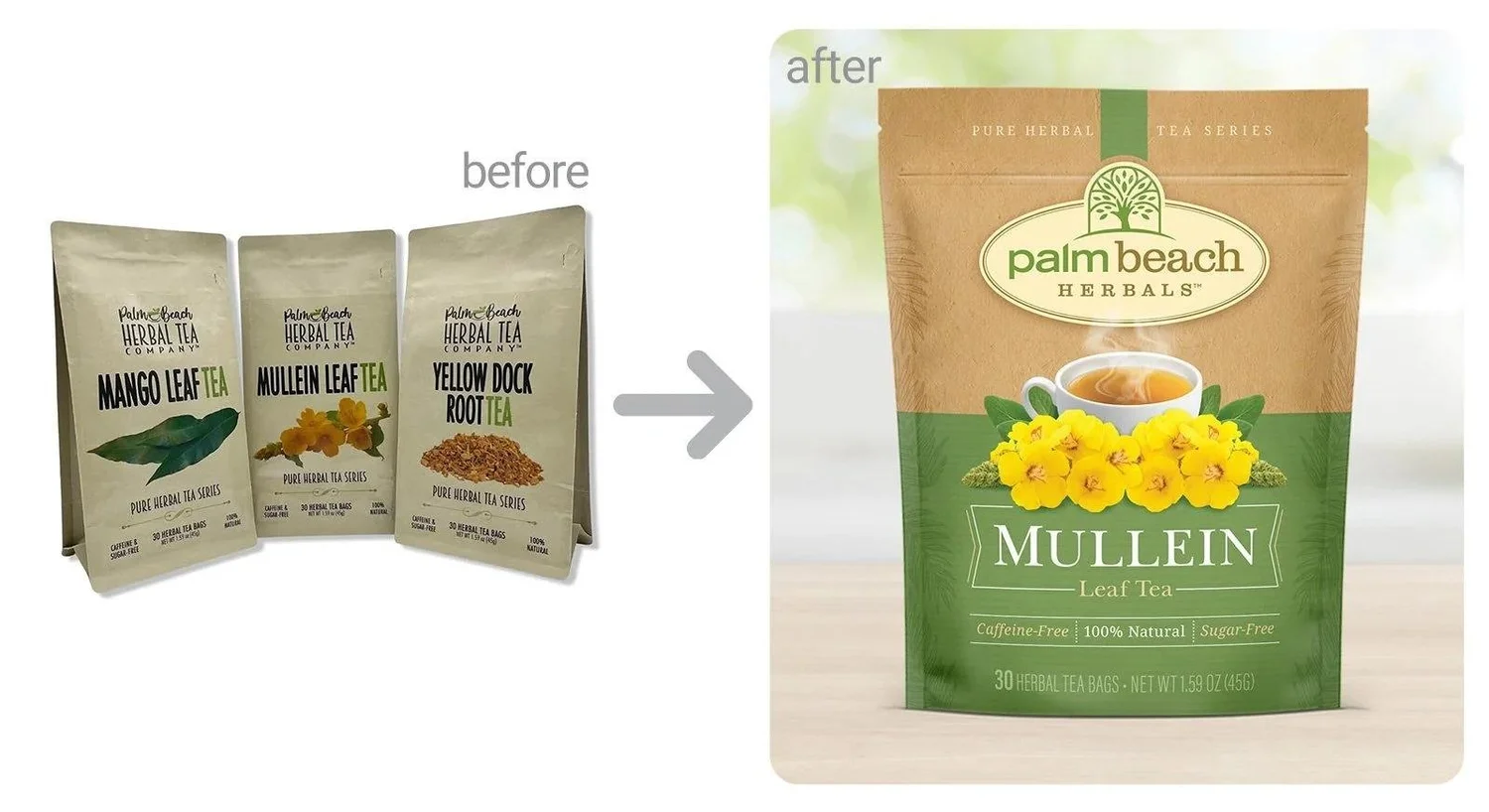
The definitive antidote to this digital epidemic is creative packaging design led strictly by a human designer who intimately understands overall brand strategy, complex shelf context, and rigid physical production constraints.
Strategic Moodboarding and Concepting: Utilizing advanced technology is not inherently wrong, but AI must be heavily restricted to serving strictly as a moodboard or initial drafting tool. It should act as a rapid brainstorming assistant to spark human creativity, not as the final decision-maker.
The Undeniable Power of Hybrid Models: As recent industry research prominently highlighted, the strongest trust metrics and highest purchase intent consistently go to hybrid AI-human design work. Consumers deeply appreciate AI's visual flair when properly filtered through professional human experience.
Translating Raw Concepts into Reality: In actual daily professional practice, an experienced designer is tasked with translating an initial AI concept into a tangible reality. They meticulously rework the artificial output to account for strict visual guidelines and accurate brand color matching.
Mastering the Crucial Three-Foot Rule: True creative packaging design ensures that a physical package reads perfectly at a glance from three feet away in a brightly lit grocery aisle. Human designers intuitively adjust scale and contrast so the customer instantly absorbs the primary selling proposition.
Leveraging Professional Bridging Services: If you have already generated a digital concept and genuinely want to turn it into something printable, that is exactly what a specialized Human + AI Estimate is meticulously built for. It bridges the massive gap between desktop fantasy and retail-ready reality.
Retaining the Authentic Brand Soul: This intelligent collaborative approach ensures that the final physical packaging retains a genuine human soul and tells a compelling brand story, completely avoiding the soulless aesthetic of fully automated workflows.
Label Design Trends and Printing Services AI Still Can't Replace
Artificial intelligence still absolutely cannot reliably replace nuanced human judgment on two very specific, highly critical fronts. These specialized areas involve staying culturally current with visual movements and executing complex, highly technical physical print production workflows that demand zero margin for error.
Label Design Trends That Need a Human Eye
Navigating Nuanced Cultural Context: The specific visual cues driving massive retail sales right now require deep cultural awareness that algorithms simply cannot replicate. They only know historical averages, while human designers understand the shifting emotional pulse of consumers.
Strategic Visual Positioning Decisions: Implementing precise historical retro references or choosing deliberate minimalist-versus-maximalist brand positioning are strategic business decisions. Real label design trends are utilized in direct response to a fiercely competitive retail shelf, not generic patterns an algorithm infers from a text prompt.
Accurately Signaling Luxury Tiers: Tactical physical finish choices, such as custom structural embossing, spot UV coating, or metallic foil stamping, successfully signal a specific luxury price tier. AI models cannot properly specify these specialized tactile experiences.
Adapting to Trends in Real-Time: Human designers possess the vital emotional intelligence necessary to properly understand and implement these current packaging design trends. They ensure your product authentically resonates with your target demographic, preventing your brand from looking tone-deaf upon launch.
Why Printing and Production Still Need a Human in the Loop
Guaranteeing Flawless Dieline Accuracy: Getting a brilliant graphic design from a glowing computer screen to a physical retail shelf involves extreme structural dieline accuracy. Machine-generated files completely lack these necessary vector paths required for commercial folding and cutting.
Executing Crucial Color-Mode Conversion: Automated systems inherently operate in an RGB digital color space and completely fail to execute meticulous CMYK color-mode conversion for industrial printing presses. This massive oversight frequently results in muddy printed brand colors.
Managing Material-Specific Ink Absorption: AI models arrive as single, flattened raster images, completely ignoring complex real-world physics. A machine cannot anticipate how a specific pantone ink will absorb into uncoated recycled paper versus how it sits on a glossy metallic film.
Providing Comprehensive Professional Support: Our detailed package design & label design resources comprehensively cover exactly what our professional graphic design and printing services actually handle on the production side to ensure seamless factory execution.
Preventing Catastrophic Manufacturing Errors: Without a human expert actively managing these granular, highly technical production details, your unedited AI design will inevitably fail, resulting in incredibly costly printing errors and severely delayed product launches.
Final Words
AI slop design is the design industry's direct version of a much larger global cultural shift toward rapid automation, and it is certainly not going away on its own. The consumer brands currently losing precious market share to it aren't necessarily avoiding artificial intelligence; they are simply using it without verifying the final output against a cohesive brand identity, a competitive retail shelf, or a strict mechanical print spec. The ultimate, most profitable fix isn't about avoiding modern technology entirely- it is about intentionally putting a real, highly experienced packaging designer in San Diego back into the loop before anything ever goes to the commercial printing press.
If you have a machine-generated concept sitting idle in a desktop folder and want legitimate AI packaging design solutions to turn it into physical packaging that actually sells, get a free packaging estimate, and our expert team at Lien Design will walk you through every single step of the professional process.
Why You Should Trust the Experts at Lien Design
Tom H. Lien is the founder of Lien Design, an award-winning art director, and a best-selling author. With over two decades of professional design experience in California, Tom brings unparalleled expertise to every project. His deep understanding of retail strategy and consumer psychology ensures your products avoid generic digital pitfalls. Partner with a true industry veteran to elevate your brand and confidently dominate your product category on the competitive retail shelf.
FAQs About AI Slop Design
What does "AI slop" actually mean?
Merriam-Webster's 2025 Word of the Year defines it as low-quality digital content produced at scale by artificial intelligence. In graphic design, it refers to raw AI graphics published without genuine human editing.
How can I tell if my packaging or label design is AI slop?
Check for heavily inconsistent brand colors across your product variations, typography that fails to match your brand fonts, garbled small print, and layouts entirely lacking real visual information hierarchy.
Does using AI anywhere in the design process make it AI slop?
No. Research confirms hybrid AI-human design consistently outperforms AI-only design on consumer trust. The defining difference is whether a professional human designer actively reviews, edits, and directs the final output.
Can AI slop packaging actually hurt sales?
Yes. A 2026 industry study found AI-only designs earned significantly lower trust scores and purchase preference. Consumers are simply unwilling to pay premium prices for strictly AI-generated product graphics.
How do human designers fix AI-generated packaging concepts?
Professional designers meticulously rebuild flattened AI concepts into structurally sound vector files. They correctly adjust complex physical dielines, execute proper print color conversions, and ensure exact brand consistency before manufacturing.