
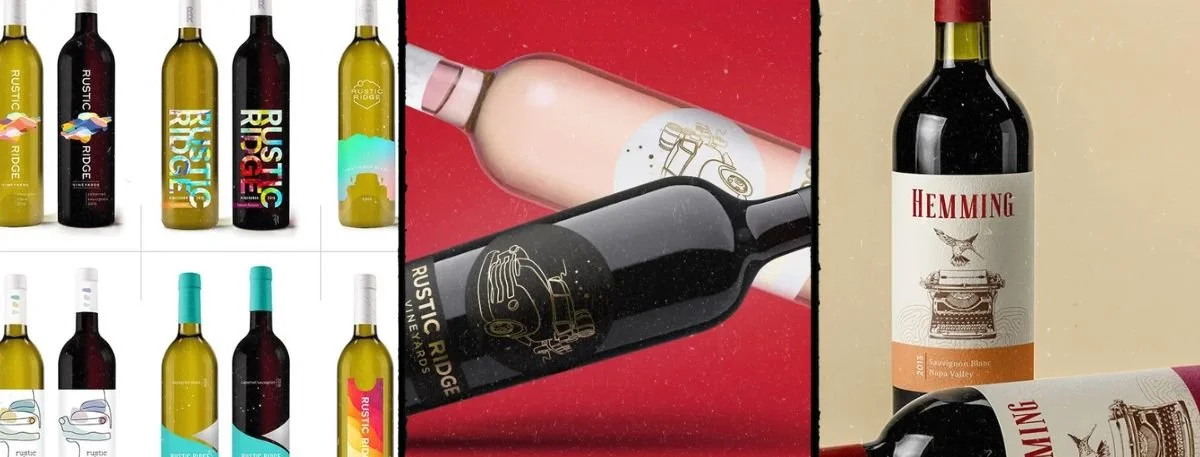
Wine label design cost doesn't come down to one number- it comes down to scope. The gap between a simple refresh and a full custom redesign is bigger than most brands expect. How much custom illustration is involved, what print finish you choose, and how many SKUs share one design system move the price more than the category does. An industry-average figure is useless for a label design budget, since projects vary widely by scope.
When researching wine bottle label design pricing, precision matters. As a packaging designer in San Diego, we know an accurate estimate requires understanding specific service tiers. In this blog, we'll cover what drives prices up or down, what is included at each tier, and why hiring professionals beats DIY tools, so you know exactly what to request in a label design quote.
What's Actually Included at Each Pricing Tier
Wine label design cost is best understood as three distinct beverage label design scope tiers rather than a single fixed figure. The tier, not the category, determines the price.
Tier 1: Simple Refresh or Brand Extension
This level is tailored for updating a vintage year, adjusting copy, or extending an existing label system to a new SKU within the same brand.
It is the fastest and least expensive tier because the brand system already exists.
Absolutely no new concept work is required.
It inherently requires minimal revision rounds from the creative team.
Tier 2: Full Custom Redesign, Single SKU
This requires a ground-up concept for one distinct label, typically presented as multiple design directions built around new or refreshed brand positioning.
This is where most first-time or rebranding wineries land when assessing winery brand identity design fees.
The process natively includes a few rounds of revision to perfect the aesthetic.
It covers strategic layout, typography selection, and pre-press files ready for your chosen printer.
Tier 3: Multi-SKU System with Custom Illustration and Premium Finish
This advanced phase involves a full brand system extended across several varieties, plus custom illustration work and finishing like foil stamping or embossing.
This tier carries the highest total project cost of the three.
It usually yields the lowest cost per SKU, since you build the core system only once.
Read more about this intensive process in our wine bottle label design complete guide.
What Drives the Price Up
The biggest factors that drive wine label design cost up are custom illustration, premium print finishes like foil stamping, a higher SKU count, and compliance review time for TTB/COLA approval on each label.
Design Complexity
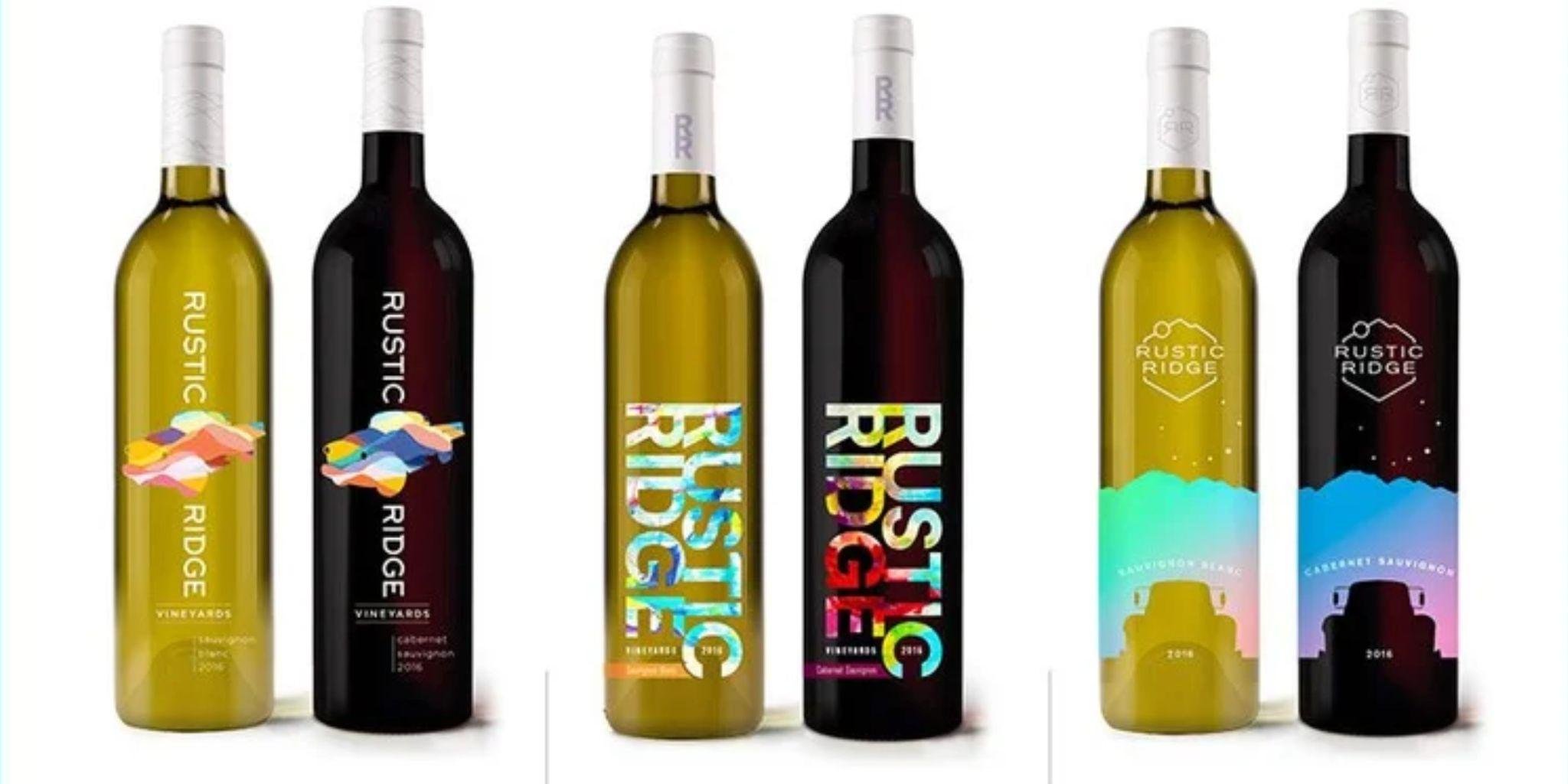
How much does label design cost relies heavily on integrating custom artwork and exploring multiple creative options naturally increases these commercial wine packaging cost factors.
Custom illustration or hand-lettering instead of stock or template elements increases labor time and cost.
Requesting multiple concept directions presented up front adds to the initial workload.
Extra revision rounds beyond what's explicitly included will inevitably increase the final bill.
Print Finish
Upgraded tactile embellishments elevate your print finish cost and require specialized file preparation.
Foil stamping, embossing, or debossing add cost per label.
The exact premium depends on the coverage area, so ask your vendor to break it out separately in the quote.
Uncoated or heavier textured stock costs considerably more than standard coated paper.
SKU Count and Compliance Review
Scaling your product line and navigating federal regulations demands meticulous attention to detail.
Every additional varietal or SKU sharing a brand system adds design and production time.
This extra time is required even when the core layout stays the same.
TTB & COLA-compliant label design review adds mandatory time and cost.
Expenses increase, especially when you need to review each SKU separately rather than the line as a whole.
What Drives the Price Down
Wine label design cost natively decreases when the project extends an existing brand system, sticks to a single SKU, uses a simpler print finish, and needs only minimal revision rounds.
Working Within an Existing Brand System
Leveraging your current brand equity is the most efficient way to lower your overall label design budget.
Extending or lightly refreshing an established label cuts both design time and revision rounds substantially.
This approach is vastly cheaper than developing a new identity from a blank page.
It lets you lock in custom wine label pricing without sacrificing visual consistency.
Single SKU, Simpler Print Run
Simplifying your immediate deliverables and material choices keeps financial overhead remarkably lean.
Focusing strictly on one single label keeps design costs toward the lower end of the range.
Utilizing standard coated stock avoids the premium markups of textured estate papers.
Relying on digital printing rather than specialty print finishing minimizes overall production cost.
DIY vs. Hiring a Professional: The Real Trade-offs
DIY template tools cost less upfront but carry the most risk on a regulated product like wine, potentially ruining your custom wine bottle label ROI.
DIY/template tools offer the lowest upfront cost, but they provide no compliance review or print-production guidance.
The label creator is entirely responsible for meeting TTB requirements.
Mistakes in TTB-required label elements can mean a legally rejected COLA application or a wasted print run.
Hiring a professional costs more upfront, but includes compliance-aware design and print-ready files built specifically for your printer and substrate.
Professional agencies have structured revision rounds built directly into the process.
The break-even point is usually the cost of a single reprint—one rejected submission or ruined run costs more than the difference between DIY and professional design.
Why Trust Lien Design's Packaging Experts
Lien Design is an award-winning boutique studio led by expert packaging designer in San Diego, Tom H. Lien. With over 25 years of CPG experience, Tom personally directs 90% of all creative work, ensuring a premium, consistent touch. Combining big-agency expertise with small-agency service, Tom and his rigorously vetted team create data-driven, functional designs that mesmerize, inform, and ultimately help your wine brand leap off the shelf.
Final Words
Wine label design cost isn't one number- it's a range shaped by how much custom work is involved, what print finish you choose, and how many SKUs need to share the system. The fastest way to get an accurate number for your specific project is a real quote, not an industry average, since scope moves the price more than any other factor.
If you're budgeting for a redesign or a new SKU launch, contact the experts at Lien Design and get a free packaging design estimate to have a real number to work with instead of just guesses.
FAQs About Wine Label Design Cost
Is it worth paying more for a custom wine label?
For brands signaling a specific price tier, yes. A custom label makes typography, imagery, and finish work intentionally. For a simple line extension, a lighter refresh is usually the better spend.
Does the cost include TTB/COLA compliance review?
Not always- confirm this explicitly before hiring. Some include compliance-aware design, while others leave the review to you, which can mean a costly rejected submission if you miss something.
How much more do foil stamping or embossing add to the cost?
It depends on coverage area and your printer's setup, but both add a per-label premium. Ask for this specific foil stamping cost broken out as its own line item in your quote.
Do multiple SKUs in one wine line cost more than a single label?
The total project cost is higher, but the cost per SKU typically drops. The core brand system, typography, and layout only need to be developed once and then adapted across the line.
How much does label design cost for a small winery?
It depends heavily on scope- a single-SKU refresh costs far less than a full multi-SKU redesign. Get a project-specific quote rather than budgeting off an industry average to secure realistic SKU pricing.